
In a crushing system, coarse crushing and fine crushing are two different stages. A coarse crusher is mainly used for primary size reduction, while a fine crusher is used to produce smaller and more uniform particles after the material has already been reduced.
For industries such as mining, chemical processing, fertilizer production, food processing, biomass handling, pharmaceutical preparation, and construction materials, choosing the right crusher affects capacity, particle size, energy use, equipment wear, and downstream process stability.
A Coarse Crusher: What Is It?
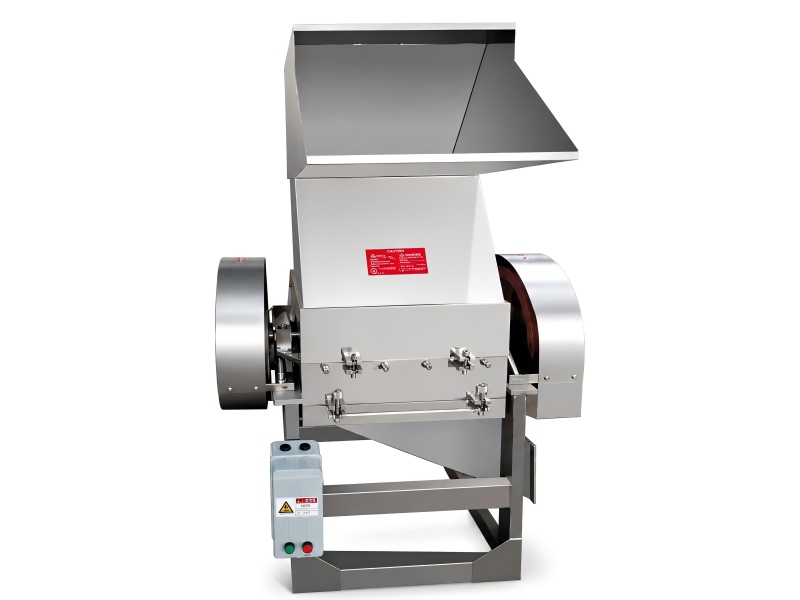
Large raw materials can be broken up into smaller pieces using a coarse crusher for better handling or additional processing. It is often the first crushing machine in a production line.
Common coarse crushers include:
- Jaw crusher
- Hammer crusher
- Roll crusher
- Rotary crusher
- Coarse impact crusher
- Coarse crushing machine for lump materials
A coarse crusher usually handles larger feed sizes, stronger impact loads, and higher material volumes. Its main goal is not to produce very fine powder, but to reduce bulk material into manageable particles.
Typical coarse crushing results may range from 20 mm to 300 mm, depending on the machine type, screen size, rotor speed, and material hardness.
What Is a Fine Crusher?
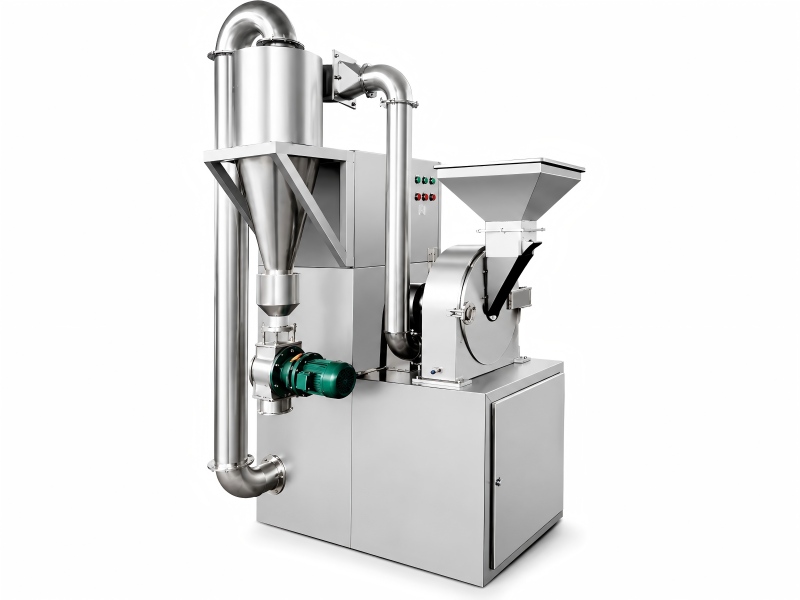
A fine crusher is used after coarse crushing or medium crushing. Its main function is to further reduce material size and create smaller, more controlled particles.
Common fine crushers include:
- Fine hammer crusher
- Impact fine crusher
- Roller fine crusher
- Cage crusher
- Pin crusher
- High-speed crusher
- Fine grinding crusher
Fine crushers are more focused on particle size control, uniform output, and better surface area improvement. They are often used when the material needs to enter mixing, drying, granulation, pelletizing, extraction, or packaging processes.
Typical fine crushing results may range from 0.5 mm to 20 mm. In some systems, fine crushing can also prepare material for milling or powder processing.
Coarse Crusher vs Fine Crusher: Main Comparison
| Item | Coarse Crusher | Fine Crusher |
| Main function | Break large materials into smaller lumps | Produce smaller and more uniform particles |
| Crushing stage | Primary crushing | Secondary or final crushing |
| Typical feed size | 100–1,500 mm | 5–100 mm |
| Typical output size | 20–300 mm | 0.5–20 mm |
| Reduction ratio | Around 3:1 to 6:1 | Around 5:1 to 20:1 |
| Capacity range | Higher capacity | Medium to lower capacity |
| Energy use per ton | Usually lower | Usually higher |
| Particle uniformity | Medium | Better |
| Equipment wear | Heavy impact wear | Higher wear on screens, hammers, pins, or liners |
| Common purpose | Pre-crushing and size reduction | Final size control and process preparation |
Typical Particle Size Data
The following details can serve as a general reference. A coarse crusher is suitable when the material is too large for downstream equipment. Actual results depend on material hardness, moisture, machine design, rotor speed, screen opening, and feeding stability.
| Crushing Stage | Feed Size | Output Size | Common Use |
| Coarse crushing | 100–1,500 mm | 50–300 mm | Large raw material reduction |
| Medium crushing | 30–300 mm | 10–80 mm | Preparing material for fine crushing |
| Fine crushing | 5–100 mm | 0.5–20 mm | Producing smaller particles |
| Powder preparation | Below 20 mm | Below 1 mm | Feeding mill or grinder |
A coarse crusher is suitable when the material is too big for downstream machinery. A fine crusher is more suitable when the process requires smaller particles, better mixing, faster drying, or more stable feeding.
Capacity and Energy Comparison
| Parameter | Coarse Crusher | Fine Crusher |
| Typical capacity | 1–2,000 t/h | 0.1–200 t/h |
| Energy consumption | 0.2–1.5 kWh/t | 1–8 kWh/t |
| Rotor speed | Lower to medium | Medium to high |
| Output control | Screen, gap, crushing chamber | Screen, rotor speed, blade type, gap |
| Maintenance focus | Jaw plate, hammer, liner, bearing | Screen, hammer, pin, blade, liner |
Fine crushing normally consumes more energy because the machine must create smaller particles and more fracture surfaces. When output size becomes smaller, the energy required per ton usually increases.
Difference in Crushing Principle
A coarse crusher often uses compression, impact, or shearing force to break large materials. The crushing chamber is usually larger and stronger, allowing the machine to accept irregular lumps, blocks, stones, roots, agglomerates, or bulk solids.
A fine crusher uses more controlled impact, cutting, grinding, or squeezing action. The material passes through smaller screens or gaps, which helps control final particle size. Because the material stays longer inside the crushing chamber, heat generation and wear may be higher.
Material Suitability
| Material Type | Better Choice | Reason |
| Large stone or ore | Coarse crusher | Handles large and hard feed material |
| Biomass blocks | Coarse crusher | Reduces size before drying or pelletizing |
| Chemical lumps | Coarse crusher + fine crusher | Coarse crushing first, then particle control |
| Fertilizer granules | Fine crusher | Produces smaller and more even particles |
| Food materials | Fine crusher | Better for controlled particle size |
| Wet sticky material | Depends on design | Anti-clogging structure may be needed |
| Brittle material | Fine crusher | Easier to break into uniform particles |
| Hard abrasive material | Coarse crusher first | Reduces load on fine crusher |
For many production lines, coarse crushing and fine crushing are not competing options. They work together. The coarse crusher reduces the initial size, and the fine crusher improves final particle quality.
How Output Size Affects Production
Particle size is not only a crusher specification. It directly affects the next process.
Smaller particles usually dry faster because they have more surface area. In drying systems, reducing material from 50 mm to 10 mm can significantly improve drying efficiency and moisture uniformity.
In mixing systems, smaller and more uniform particles help improve blending accuracy. Large particles may separate during conveying, storage, or packaging.
In granulation systems, controlled particle size improves feeding stability and final granule quality. Oversized material may cause uneven granulation, higher binder use, or unstable equipment operation.
Process Flow Example
A typical crushing line may follow this structure:
Raw material → Coarse crusher → Conveyor → Fine crusher → Screening machine → Mixer / dryer / granulator / storage silo
| Process Step | Main Purpose | Example Output |
| Raw material feeding | Deliver bulk material | 300–800 mm |
| Coarse crushing | Reduce large lumps | 50–150 mm |
| Fine crushing | Control particle size | 1–20 mm |
| Screening | Remove oversized particles | Qualified material |
| Return crushing | Reprocess oversized material | Stable output |
This type of staged crushing can reduce equipment overload, improve output consistency, and extend the service life of the fine crusher.
Advantages of Coarse Crusher
A coarse crusher has strong feeding capability and can process large, irregular materials. It is suitable for the first stage of material reduction, especially when raw materials arrive in blocks, lumps, or large pieces.
It also offers higher capacity in many heavy-duty applications. Because it does not need to produce very fine particles, the throughput can be much higher than a fine crusher.
Maintenance is usually focused on heavy-wear parts such as jaw plates, hammers, liners, shafts, and bearings. For hard materials, wear-resistant steel or alloy components are often used.
Advantages of Fine Crusher
A fine crusher provides better particle size control. It is useful when the final product must meet a specific size range before mixing, drying, granulation, or packaging.
Fine crushing also improves material uniformity. More consistent particles can improve heat transfer, chemical reaction speed, extraction efficiency, and final product appearance.
For manufacturers, a fine crusher can help reduce oversized material and improve production stability. When paired with a screen, the system can return unqualified particles for re-crushing.
Common Selection Mistakes
One common mistake is using a fine crusher directly for oversized raw material. This can cause feeding blockage, motor overload, screen damage, and fast wear.
Another mistake is choosing only based on output size. Material hardness, moisture, oil content, fiber content, abrasiveness, and temperature sensitivity should also be considered.
Some buyers also ignore capacity matching. A coarse crusher with very high capacity may overload the fine crusher if the line is not balanced. The feeding system, conveyor, screen, dust collector, and discharge system must match the crusher capacity.
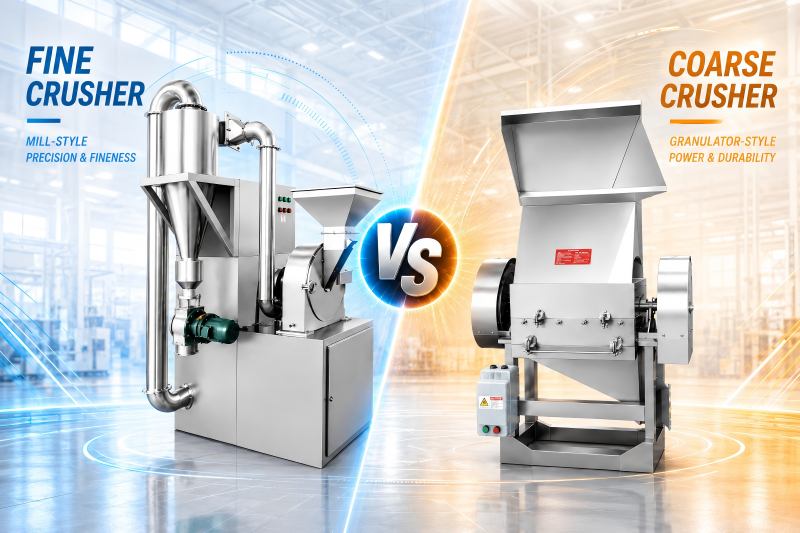
How to Choose Between Coarse Crusher and Fine Crusher
| Selection Factor | Choose Coarse Crusher When | Choose Fine Crusher When |
| Raw material size | Material is large or bulky | Material is already pre-crushed |
| Target particle size | Output can remain coarse | Smaller particles are required |
| Production capacity | High throughput is needed | Controlled final size is more important |
| Process position | First crushing stage | Second or final crushing stage |
| Material condition | Large lumps or blocks | Granules, chips, flakes, or small pieces |
| Downstream process | Feeding conveyor or dryer | Mixing, drying, granulation, milling |
If the raw material is large and the final output must be small, the best solution is usually not one crusher, but a combined coarse crushing and fine crushing system.
Crushing Data for Different Industries
| Industry | Common Raw Material | Coarse Crushing Output | Fine Crushing Output |
| Chemical | Resin blocks, agglomerates | 30–100 mm | 1–10 mm |
| Fertilizer | Caked material, organic waste | 50–150 mm | 2–20 mm |
| Food | Dry roots, grains, spices | 20–80 mm | 0.5–5 mm |
| Biomass | Wood chips, straw blocks | 30–100 mm | 3–20 mm |
| Mining | Ore, limestone, gypsum | 50–300 mm | 5–30 mm |
| Pharmaceutical | Dry granules, herbal material | 10–50 mm | 0.5–3 mm |
These values are only reference ranges, but they show the basic difference: coarse crushers solve the problem of large feed size, while fine crushers solve the problem of final particle control.
Maintenance Comparison
| Maintenance Item | Coarse Crusher | Fine Crusher |
| Main wear parts | Jaw plate, hammer, liner | Screen, blade, hammer, pin, liner |
| Wear speed | High under impact load | High under fine crushing friction |
| Cleaning difficulty | Medium | Higher if screen holes are small |
| Blockage risk | Lower for dry large material | Higher with wet or sticky material |
| Inspection frequency | Regular | More frequent for fine screens |
Fine crushers often require more careful cleaning, especially when handling sticky, oily, fibrous, or moisture-containing materials. If the screen is blocked, output capacity and particle size stability will drop quickly.
A coarse crusher handles primary size reduction, large materials, and high-capacity feeding, while a fine crusher produces smaller, more uniform particles for downstream processing.
For simple crushing, a coarse crusher may be enough. For stable particle size, better mixing, faster drying, or higher consistency, a fine crusher is usually needed.
Many production lines use a staged system: coarse crushing, fine crushing, and screening to improve efficiency, protect equipment, and keep the process stable.